

Fashion Seasonality Explained: How Timing Drives Luxury Deals
TL;DR:
- Luxury fashion seasons are planned six months in advance, affecting when discounts are available.
- End-of-season sales typically occur in January and June, with deep discounts often found later.
- Shoppers should monitor multiple channels as climate shifts and seasonless drops disrupt traditional sale patterns.
Luxury fashion runs six months ahead of the actual weather. That means the wool coats hitting stores in August were designed and ordered the previous winter, and the swimwear you see in February was finalized last summer. Most shoppers never realize this, which is exactly why they miss the best deal windows. Understanding the fashion season calendar is not just industry trivia. It is a practical tool that tells you when to buy, when to wait, and when to pounce on markdowns that most people walk right past. This guide breaks down the full system, from runway to retail to clearance rack.
Table of Contents
- The structure of fashion seasons: What does seasonality really mean?
- Behind the calendar: How timing impacts launches, sales, and markdowns
- The science of markdowns: Margins, strategies, and luxury deal windows
- Exceptions and trends: The global shift to seasonless fashion
- Perspective: Why mastering fashion seasonality is the smartest luxury move
- Unlock your luxury edge: Shop designer deals aligned with seasonality
- Frequently asked questions
Key Takeaways
| Point | Details |
|---|---|
| Calendars run ahead | Runway shows and new collections launch about six months before the intended season, so markdowns appear sooner than most expect. |
| Best sales windows | Major luxury markdowns happen at the end of winter and summer seasons, rewarding buyers who time their purchases strategically. |
| Outlets boost savings | Luxury outlets and resale platforms often offer deeper discounts, especially after season turnover. |
| Seasonless trend rising | Global brands are increasingly shifting toward all-year, timeless collections, making some deal windows less predictable. |
The structure of fashion seasons: What does seasonality really mean?
To understand luxury deal timing, you first need to decode how fashion seasons work. Fashion seasonality refers to the structured calendar that brands follow to introduce, sell, and eventually discount their collections. It is not random. It is a precise, repeating cycle that has governed the industry for decades.
The traditional luxury calendar runs on four main seasons:
- Spring/Summer (SS): Collections shown in September to October, arriving in stores February to March
- Fall/Winter (FW): Collections shown in February to March, arriving in stores August to September
- Resort/Cruise: Shown in May to June, arriving in stores November to December
- Pre-Fall: Shown in June, arriving in stores June to July
Here is the key insight most shoppers miss. Collections are shown six months in advance of the actual selling season. So when you see models walking a runway in Paris in February, you are watching clothes that will not reach a boutique near you until late summer. This gap exists because production, logistics, and retail buying all need lead time to function.
| Season | Runway show | Arrives in stores | End-of-season sale |
|---|---|---|---|
| Spring/Summer | Sept to Oct | Feb to March | June to July |
| Fall/Winter | Feb to March | Aug to Sept | Jan to Feb |
| Resort/Cruise | May to June | Nov to Dec | March to April |
| Pre-Fall | June | June to July | Sept to Oct |
Understanding this table gives you a genuine edge. When you know that Fall/Winter pieces arrive in August but go on sale in January, you can plan purchases around your budget instead of impulse. Familiarizing yourself with luxury retail terminology also helps you navigate this calendar with more confidence.
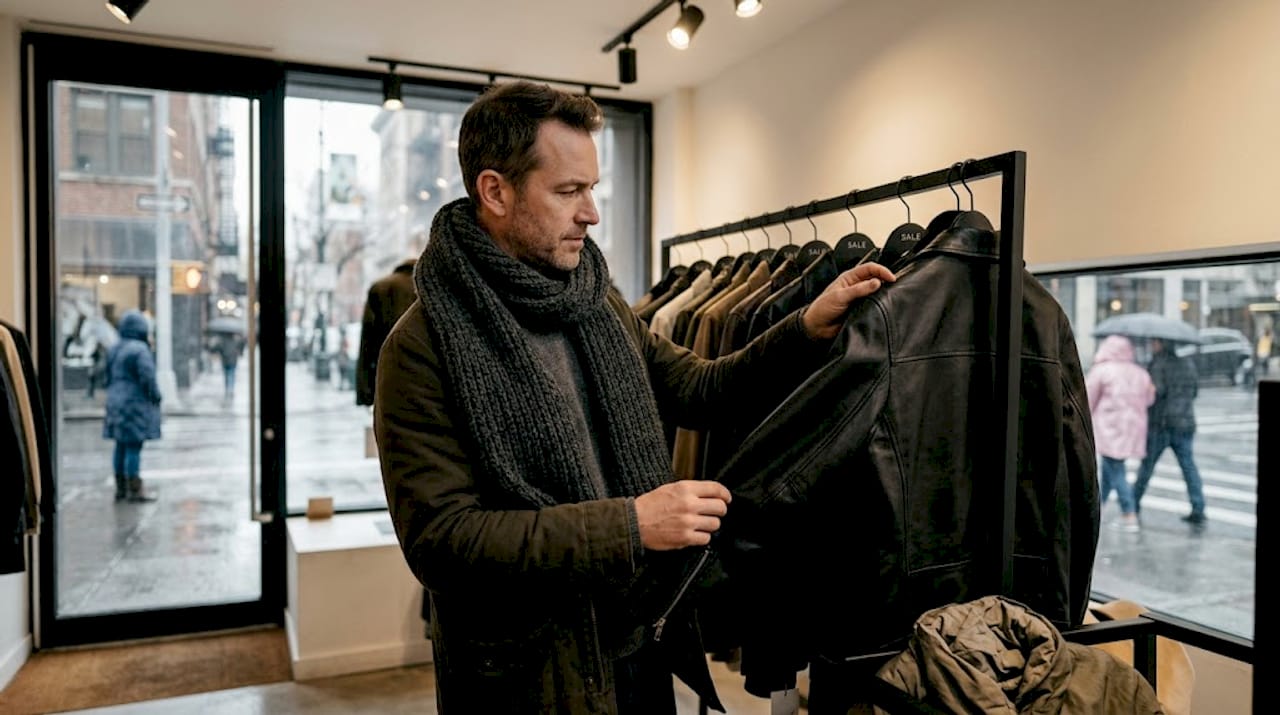
The seasonal structure also explains why a leather jacket feels expensive in September but suddenly drops in price by February. The brand needs to clear inventory to make room for the next cycle. That is not a coincidence. It is the system working exactly as designed.
Behind the calendar: How timing impacts launches, sales, and markdowns
Now that we have the calendar, let us map how timing translates into launches, markdowns, and deal windows. The six-month lead time is not just a production quirk. The system runs six months ahead for production, buying, and logistics, which means every price you see in a luxury boutique reflects months of planning, not just current market conditions.
Here is how a typical luxury item moves from concept to clearance:
- Designers finalize the collection and show it at fashion week
- Buyers from department stores and boutiques place orders
- Production runs for several months in factories
- Items ship to retail locations and arrive on the floor
- Full-price selling period begins, lasting roughly three to four months
- Markdowns begin as the season winds down and new inventory arrives
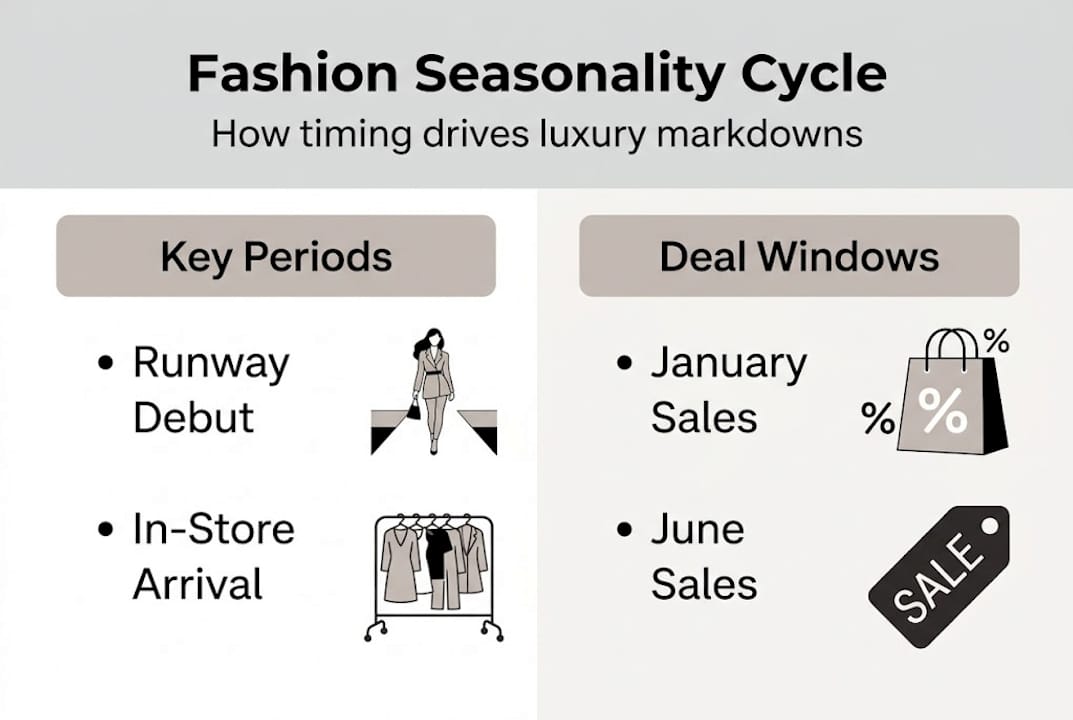
| Stage | Timing relative to season start | Price level |
|---|---|---|
| Runway debut | 6 months before | Not for sale |
| Store arrival | Season start | Full retail |
| Mid-season | 6 to 8 weeks in | Occasional promotions |
| End-of-season | Season end | 20 to 30% off |
| Deep clearance | Post-season | 40 to 70% off |
Luxury brands clear seasonal inventory with selective markdowns of 20 to 30%, which is modest compared to fast fashion but still significant on a $1,200 coat. The key is knowing exactly when that window opens.
Pro Tip: Mark your calendar for late January and late June. Those are the two most reliable markdown windows for luxury fashion globally. Set alerts on your favorite brand sites or check outlet destinations regularly during those weeks.
Understanding sales cycles in luxury also reveals something counterintuitive. The best deals often appear not at the start of a sale but two to three weeks in, when stores make a second markdown cut to move remaining inventory. Patience pays. Tracking luxury fashion discounts across multiple channels gives you a broader view of where prices are heading.
The science of markdowns: Margins, strategies, and luxury deal windows
With the calendar in mind, it is time to dig into the financial reasons behind luxury markdowns and how shoppers benefit. Markdowns are not just a customer perk. They are a financial necessity for brands.
Markdowns consume 20 to 50% of net sales, and disciplined markdown optimization can boost margins by 400 to 800 basis points. That is a massive swing, which is why luxury houses invest heavily in markdown strategy rather than just slashing prices randomly.
Here is what that means for you as a shopper:
- Outlets and resale platforms offer the deepest cuts, often 20 to 70% off retail
- End-of-season boutique sales tend to be more conservative, 20 to 30% off
- Department store clearance often falls in the middle, 30 to 50% off
- Online outlet retailers can match or beat physical outlet pricing with better selection
Luxury discounts are modest at 20 to 30% on seasonal items, but outlets and resale platforms regularly offer 20 to 70% savings. That range is wide because the channel matters as much as the timing.
Full-price sell-through for luxury items hovers around 50%, meaning roughly half of every collection eventually gets marked down. That is a significant pool of discounted designer goods if you know where to look. Exploring authentic luxury deals and browsing discounted luxury best sellers can help you identify which pieces are worth targeting.
Pro Tip: Skip chasing discounts on classic silhouettes like a structured black blazer or a neutral leather bag. These items hold value and rarely see deep cuts. Focus your bargain hunting on bold seasonal colors, statement prints, and trend-driven silhouettes that brands need to clear quickly.
Understanding the types of designer sales also helps you prioritize your shopping strategy across different channels throughout the year.
Exceptions and trends: The global shift to seasonless fashion
But what happens when the old calendar cannot keep up with global trends and weather shifts? The traditional four-season model is under real pressure, and the cracks are showing in ways that directly affect when and where you find the best luxury deals.
Brands like Gucci and Prada are moving toward seasonless models for longevity and sustainability. Instead of launching two or four collections per year, some houses now release smaller, more frequent drops that are not tied to a specific weather season. This makes the traditional markdown calendar less predictable.
The implications for shoppers are significant:
- Timeless pieces become more common, which means fewer predictable sale windows
- Drop-based releases create shorter full-price windows and faster clearance cycles
- Global retail variation means a piece on sale in Europe may still be full-price in North America
- Sustainability-driven collections are designed to sell slowly and may never reach deep discount
“The fashion calendar is no longer a reliable map. Climate shifts and global consumer behavior have forced brands to rethink when and how they release collections, creating new opportunities and new uncertainties for shoppers.”
Mismatch with real weather leads to early markdowns in warmer regions, where a heavy wool collection simply will not sell at full price in a mild winter. Retailers in those markets discount faster and deeper to move inventory, which creates regional deal opportunities that sharp shoppers can exploit.
The rise of fashion outlets as a permanent retail channel is partly a response to this disruption. Outlets absorb the overflow from both traditional and seasonless models, providing a consistent source of discounted luxury year-round. For shoppers navigating luxury fashion e-commerce, this means the best strategy is no longer just watching the calendar. It is watching multiple channels simultaneously.
Perspective: Why mastering fashion seasonality is the smartest luxury move
Conventional wisdom says to wait for the January sale or the summer clearance. That advice is not wrong, but it is incomplete. The brands that matter most are moving faster than the old calendar allows, and the shoppers who win are the ones who adapt with them.
Outlets outperform full-price stores amid value-seeking behavior, and that trend is accelerating. The smartest luxury shoppers we see are not just waiting for predictable sale windows. They are monitoring outlet channels, resale platforms, and online discount retailers throughout the year, ready to move when the right piece appears at the right price.
The calendar is a starting point, not a rulebook. Seasonless drops, climate-driven early markdowns, and the growth of outlet vs. full-price shopping have created a more fluid deal landscape. Flexibility is now a genuine competitive advantage. Whether you are hunting for a seasonal statement piece or investing in a timeless classic, the edge comes from knowing the system well enough to break from it when the moment is right.
Unlock your luxury edge: Shop designer deals aligned with seasonality
Ready to put your new understanding of fashion seasonality into action? Knowing the calendar is only valuable when you connect it to real shopping decisions.
At Designer Label Sale, we track seasonal inventory and markdown cycles so you do not have to. Right now, you can explore pieces like the Dolce and Gabbana gray leather ankle boots and the Dolce and Gabbana dress shoes, both priced well below retail. These are exactly the kinds of seasonal and classic pieces that reward shoppers who understand timing. Browse all designer sales to find current deals across every category, from handbags to footwear, updated regularly to reflect real seasonal availability.
Frequently asked questions
What is fashion seasonality and why does it matter?
Fashion seasonality is the structured calendar designers use to launch collections ahead of actual weather seasons, which directly shapes when new items arrive in stores and when markdowns begin. Knowing it lets you anticipate deal windows before most shoppers even realize a sale is coming.
When do luxury end-of-season sales happen?
End-of-season sales for winter collections typically run in January and February, while summer collections go on sale in June and July across the US and Europe. These windows are the most reliable points in the year for genuine luxury discounts.
How much can I save at luxury outlets or resale shops?
Outlets offer 20 to 70% off retail prices, while resale platforms typically provide 30 to 60% savings, with the deepest cuts appearing during and just after end-of-season periods.
Why are some luxury items rarely discounted?
Classics and timeless silhouettes hold their value and are far less likely to see significant markdowns compared to trend-driven or bold seasonal pieces that brands need to clear quickly.
Is the traditional season calendar still relevant with climate change?
The calendar still provides a useful framework, but brands like Gucci and Prada are shifting toward seasonless models driven by climate and global market pressures, making flexible, multi-channel shopping strategies more important than ever.
Recommended
- Role of Sales in Luxury: Impact on Designer Value – Designerlabelsale
- Unlocking luxury: the real role of fashion outlets explained – Designerlabelsale
- Tips for finding designer deals and luxury bargains – Designerlabelsale
- Why seek fashion bargains? Unlock luxury, authenticity, value – Designerlabelsale