

Fashion Outlets Explained: Unlock Luxury Deals and Real Savings
You walk into a designer outlet expecting premium quality at bargain prices, only to discover the leather feels different and the stitching looks simpler than the flagship store version. This confusion happens because fashion outlets offer discounts of 30-70% off, but quality varies significantly due to overstock, past-season items, or made-for-outlet manufacturing. Understanding how outlets really work transforms you from an impulse buyer into a strategic shopper who knows exactly when you’re getting genuine luxury and when you’re paying for a label.
Table of Contents
- What is a fashion outlet?
- How fashion outlets really work: merchandise and pricing
- How outlet quality compares: MFO versus overstock and factory stores
- The real pros and cons of fashion outlets
- Expert tips for shopping fashion outlets smartly
- Ready to score authentic designer deals?
- Frequently asked questions
Key Takeaways
| Point | Details |
|---|---|
| Outlet definition | Fashion outlets sell discounted brand-name goods directly, mostly overstock, past-season, or made-for-outlet items. |
| Quality varies | Not all outlet products match full-price quality—learn to spot MFO versus real overstock for better value. |
| Smart shopping tips | Timing your visit, inspecting product details, and comparing prices ensure true savings at outlets. |
| Pros and cons | Outlets deliver big-brand savings but come with trade-offs like quality variation and impulse shopping. |
What is a fashion outlet?
Fashion outlets are retail stores selling directly to consumers at 30-70% off retail prices, focusing on overstock, past season, or made-for-outlet items. Unlike regular retail stores that stock current collections at full price, outlets specialize in moving merchandise that didn’t sell through traditional channels or was specifically manufactured for discount sales.
These stores source products from four main categories: genuine overstock from flagship stores, discontinued items from previous seasons, past-season collections that didn’t move quickly enough, and made-for-outlet (MFO) items created specifically for outlet sales. The designer outlet guide explains how each category affects both price and quality.
| Feature | Outlet Store | Regular Retail Store |
|---|---|---|
| Pricing | 30-70% below MSRP | Full retail price |
| Merchandise | Overstock, past season, MFO | Current season collections |
| Selection | Limited sizes and styles | Complete size runs |
| Location | Often grouped in outlet malls | Shopping districts, standalone |
| Return policy | Often more restrictive | Standard 30-90 days |
Typical items you’ll find in fashion outlets include:
- Overstock pieces identical to retail versions
- Last season’s collections at marked-down prices
- Discontinued styles and colors
- Made-for-outlet items with simplified designs
- Irregular or slightly imperfect merchandise
- Sample sale leftovers and production overruns
Understanding outlet shopping meaning helps you recognize which category each item falls into before you buy.
How fashion outlets really work: merchandise and pricing
Outlets acquire merchandise through a specific supply chain that determines both quality and true value. Here’s how the process works:
- Retailers produce seasonal collections for flagship stores
- Unsold inventory after 6-8 weeks gets marked for outlet transfer
- Manufacturers create made-for-outlet lines using cost-reduced materials
- Outlets receive mixed inventory combining genuine overstock and MFO items
- Pricing teams inflate manufacturer’s suggested retail price (MSRP) to show larger discounts
- Stores display “compare at” prices that may not reflect actual retail history
Made-for-outlet items often have lower-cost materials and quality, while overstock is identical to retail. This distinction matters because you might pay $200 for an outlet handbag thinking you saved $400, when that bag was never sold at $600 and was manufactured specifically for outlet sale.
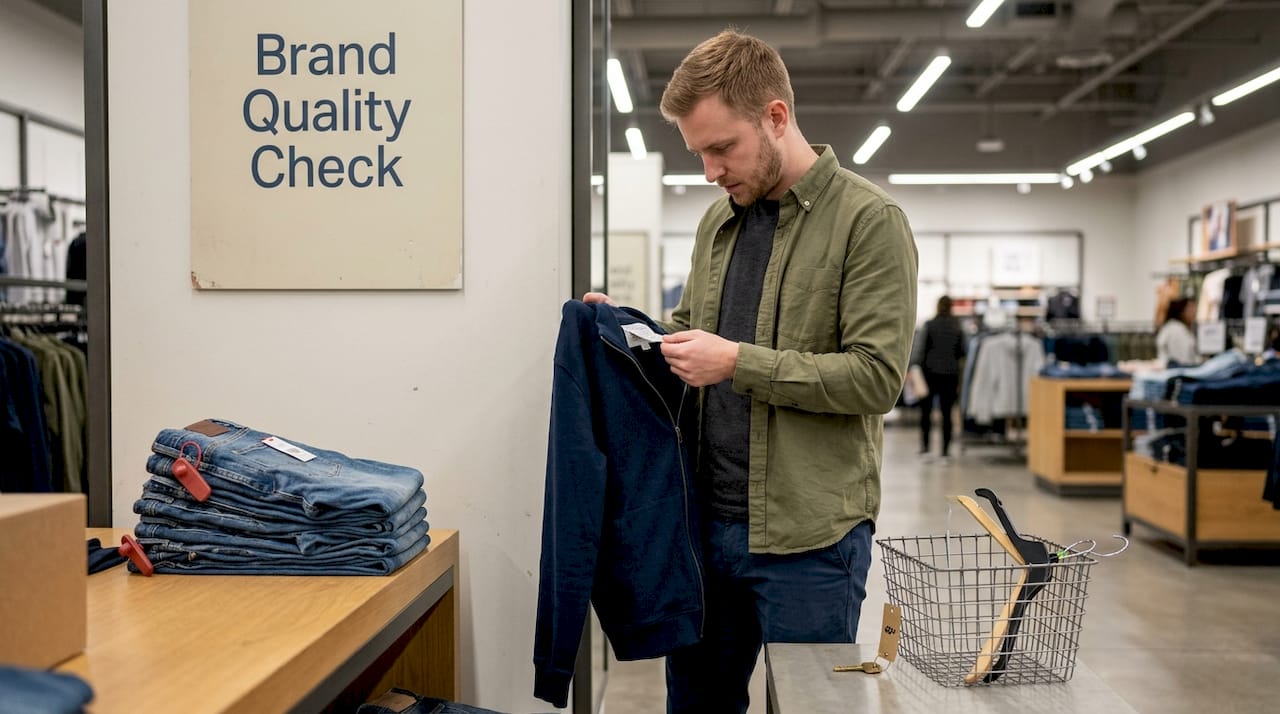
The US outlet market reached $65 billion in 2025, driven by consumers seeking brand names at reduced prices. This massive industry thrives on the perception of savings, even when actual value varies dramatically between genuine overstock and made-for-outlet merchandise.
Manufacturers inflate MSRP specifically for outlet pricing psychology. A jacket might show a “compare at $500” tag when it was designed, manufactured, and priced for $180 outlet sale from day one. Comparing designer sale prices reveals these pricing strategies and helps you identify genuine bargains.
Pro Tip: Check garment tags for factory codes, simplified labels, or quality differences in stitching and materials. Genuine overstock items typically have the same tags, care labels, and construction as full-price retail versions. Learning how to save on designer brands includes recognizing these quality markers before purchasing.
How outlet quality compares: MFO versus overstock and factory stores
Quality differences between outlet categories directly impact whether you’re getting authentic luxury or paying premium prices for budget construction. Understanding these distinctions protects your investment and ensures you know exactly what you’re buying.
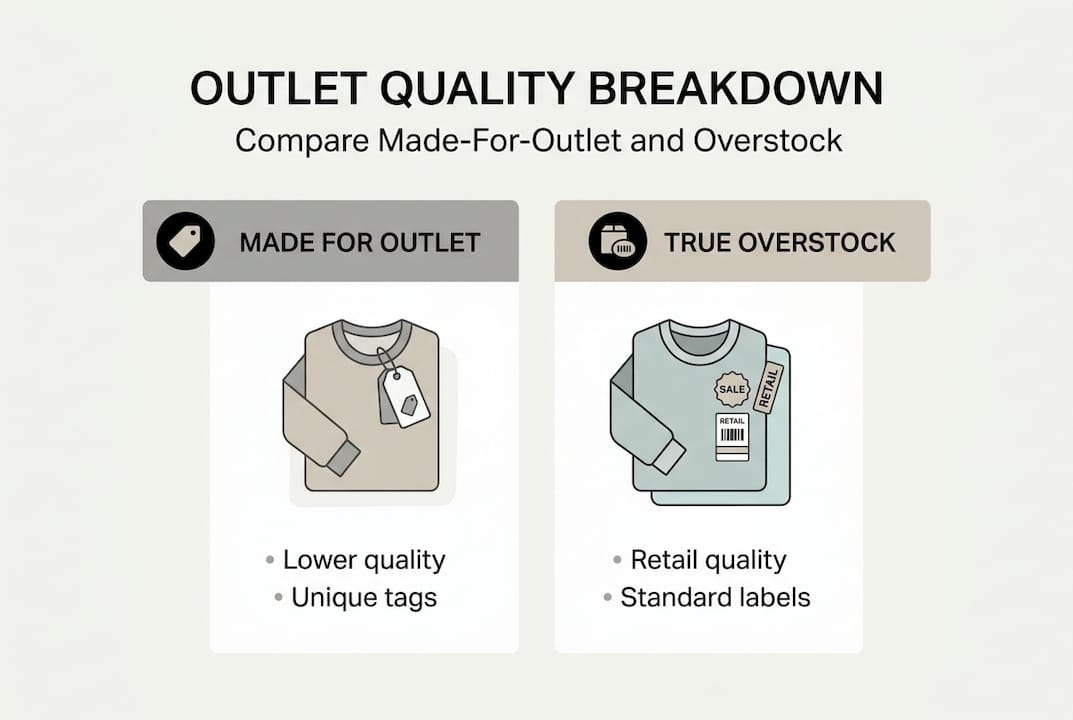
| Category | Quality Level | Price Range | How to Spot |
|---|---|---|---|
| Made-for-Outlet (MFO) | Lower materials, simplified construction | 40-60% below inflated MSRP | Special tags, factory codes, thinner materials |
| Genuine Overstock | Identical to retail | 30-50% below actual retail | Same tags as flagship stores, full construction |
| Factory Store | Variable, often near-MFO quality | 50-70% below MSRP | Located near production facilities, bulk pricing |
MFO often has lower quality with corrected-grain leather and simpler construction, identifiable by special tags like Nike FA/FN codes or Coach stamps, while factory stores near production sites offer steeper discounts. These codes aren’t hidden secrets but clear indicators once you know what to look for.
Nike uses “FA” (factory) or “FN” (factory number) codes on outlet-specific shoes. Coach stamps outlet bags with a bullseye or “Coach Factory” marking. J.Crew adds a small diamond symbol to made-for-outlet items. These markers help you distinguish between a $300 outlet bag that was originally $800 retail versus one manufactured for $300 outlet sale.
“The quality gap between genuine overstock and made-for-outlet items can be substantial. Overstock maintains the same leather grades, lining materials, and construction standards as flagship merchandise, while MFO versions often use bonded leather, polyester linings, and simplified stitching patterns to reduce manufacturing costs.”
Pro Tip: Outlets offer genuine bargains on basics, classic styles, and true overstock items. Skip trendy pieces and heavily logo’d items, which are often made-for-outlet quality designed to capitalize on brand recognition rather than deliver lasting value. Discounted designer sales explained shows you which categories typically offer the best quality-to-price ratio.
The real pros and cons of fashion outlets
Outlet shopping delivers specific advantages when you shop strategically, but several drawbacks catch uninformed buyers off guard. Weighing both sides helps you decide when outlets make sense and when alternative shopping channels offer better value.
Top advantages of outlet shopping:
- Legitimate discounts of 30-70% on overstock and past-season items
- Access to luxury brands otherwise outside your budget
- Wide selection across multiple brands in one location
- Treasure hunt excitement of finding unexpected deals
- Seasonal clearance events with additional markdowns
- Opportunity to try on items before purchasing
Significant drawbacks to consider:
- Inconsistent quality due to made-for-outlet manufacturing
- Limited size and color selection on best items
- Travel costs and time investment reaching outlet locations
- Impulse buying triggered by perceived scarcity
- Prices sometimes higher than off-price retailers like TJ Maxx
- Restrictive return policies compared to regular retail
“While the thrill of bargains and brand access are major outlet pros, MFO quality, limited selection, and travel costs can dull the savings.”
The impulse factor deserves special attention. Outlet environments create urgency through “limited quantities” and “special outlet pricing” messaging that pressures quick decisions. You might save $100 on a jacket but spend $300 on items you didn’t plan to buy, negating your savings entirely.
Luxury shopping on a budget requires comparing outlet prices against online luxury retailers, department store sales, and off-price chains. Sometimes a Nordstrom Rack or authenticated resale platform offers better deals on higher-quality items than outlet stores. Finding designer deals means knowing all your options before committing to an outlet purchase.
Expert tips for shopping fashion outlets smartly
Maximizing outlet value requires specific strategies that separate smart shoppers from those who overpay for made-for-outlet quality. These five approaches help you identify genuine bargains and avoid common pitfalls.
-
Shop mid-week during off-peak hours when staff has time to answer questions and new shipments are being processed. Tuesday through Thursday mornings offer the best selection before weekend crowds pick through inventory.
-
Inspect materials and stitching carefully before purchasing. Check leather grain quality, lining materials, seam construction, and hardware weight. Compare outlet items directly to flagship store versions when possible.
-
Research non-outlet pricing before your trip using brand websites and department store listings. Know the actual retail price, not the inflated “compare at” figure displayed in outlets.
-
Prioritize basics over trends because classic styles in quality materials deliver long-term value. Trendy pieces are often made-for-outlet items designed to move quickly based on current fashion rather than lasting construction.
-
Join outlet loyalty programs for additional discounts, early sale access, and special promotions that stack on top of already-reduced prices.
Pro Tip: Misleading “original” prices appear when outlets show inflated MSRP figures that items never actually sold for at retail. Evaluate true deals by comparing outlet prices to current department store pricing, online luxury retailers, and authenticated resale platforms. If an outlet “$600 value” bag sells for $200 but similar styles retail for $250, you’re not getting the advertised savings.
Industry data shows informed shoppers save an average of 45% at outlets compared to 25% for impulse buyers who don’t research or inspect purchases. That 20-point difference translates to hundreds of dollars annually for regular outlet shoppers.
Finding designer sales extends beyond physical outlets to online luxury sales, flash sale sites, and curated discount platforms. Authentic discounts tips include understanding designer sale types so you recognize which sales offer genuine overstock versus made-for-sale merchandise.
Ready to score authentic designer deals?
You now understand how outlets work, what made-for-outlet means, and how to spot genuine bargains versus inflated savings claims. This knowledge transforms your shopping approach from hopeful browsing to strategic buying based on quality markers and true value.
The next step is finding trustworthy sources for authenticated designer deals without the guesswork of outlet quality variations. Curated luxury platforms verify authenticity, source genuine overstock and past-season items, and eliminate the made-for-outlet confusion that complicates traditional outlet shopping.
Explore verified designer collections where every item meets flagship quality standards at outlet-beating prices. Browse Dolce & Gabbana outlet selection featuring genuine leather construction and retail-grade craftsmanship, or discover Cédric Charlier outlet pumps with the same materials and construction as full-price versions. When you shop luxury outlets online, you access authenticated designer pieces with transparent pricing and quality guarantees that physical outlets rarely provide.
Frequently asked questions
Are outlet clothes lower quality than full-price retail?
Many outlet clothes are made-for-outlet using cheaper materials or construction, but true overstock items offer the same quality as retail. Check tags and construction details to identify which category your item falls into.
How much can you actually save at fashion outlets?
Shoppers can save between 30% and 70% off retail prices at fashion outlets, depending on the brand, item, and sale event. Actual savings depend on whether you’re buying genuine overstock or made-for-outlet merchandise.
How can I tell if an outlet item is made for outlet or true overstock?
Read tags and labels for codes like Nike FA/FN or Coach bullseye stamps. Made-for-outlet items often have unique identifiers, factory suffixes, or simplified construction compared to flagship store versions.
Is shopping at outlets always cheaper than off-price retailers like TJ Maxx?
Not always because off-price stores can offer better deals on some items, especially if outlet goods are made-for-outlet quality. Compare prices across multiple channels before assuming outlets offer the best value.
Recommended
- What is a designer outlet? Your guide to 50% luxury savings – Designerlabelsale
- Fashion Clearance: Unlocking Luxury Bargains Online – Designerlabelsale
- Guide to Shopping Luxury Brands on a Budget Easily – Designerlabelsale
- Discounted Designer Sells: The Truth for Fashion Shoppers – Designerlabelsale