

Exclusivity in Fashion: Psychology, Prestige & Luxury Deals
TL;DR:
- Luxury brands engineer desire through scarcity, high prices, and social proof to enhance exclusivity.
- Maintaining control over discounts and resale is vital to preserve brand value and perceived rarity.
- Modern strategies balance exclusivity with broader access using controlled resale, digital drops, and subtle branding.
Luxury fashion has always been about more than beautiful clothes. The real engine behind those sky-high price tags and impossible waitlists is something far more calculated: psychological manipulation at scale. Brands don’t just make things expensive because they can. They engineer desire by making products feel rare, forbidden, and socially loaded. If you’ve ever felt an unexpected pull toward a sold-out bag or a limited-edition sneaker, you’ve already felt the machine working. This guide breaks down exactly how exclusivity shapes the luxury market, why it affects your buying decisions more than you realize, and how you can shop smarter without losing the status you’re after.
Table of Contents
- The psychology behind fashion exclusivity
- How brands create—and protect—exclusivity
- The risks of discounts and resale: When exclusivity backfires
- The new face of exclusivity: Balancing access and appeal
- Our perspective: The true luxury is in savvy access
- Discover exclusive luxury deals without compromising prestige
- Frequently asked questions
Key Takeaways
| Point | Details |
|---|---|
| Scarcity boosts allure | Limiting supply and access makes luxury fashion more desirable by triggering psychological FOMO and status signaling. |
| Discount pitfalls | Frequent discounts can harm brand prestige and train consumers to seek only bargains, reducing long-term value. |
| Quiet luxury rises | No-logo, high-quality ‘quiet luxury’ appeals to sophisticated buyers and maintains higher average resale values. |
| Informed buying matters | Shopping via official or curated resale channels preserves both exclusivity and savings without hurting brand image. |
The psychology behind fashion exclusivity
With the stage set, let’s examine why exclusivity holds such powerful sway in the minds of fashion consumers.
Scarcity is one of the oldest psychological triggers in the book. When something is hard to get, we want it more. In fashion, this plays out through limited production runs, members-only access, and carefully managed waitlists. The result is a near-constant state of low-grade anxiety for consumers who fear missing out on something culturally significant. That anxiety has a name: FOMO, or fear of missing out. Luxury brands don’t just benefit from FOMO accidentally. They engineer it deliberately.
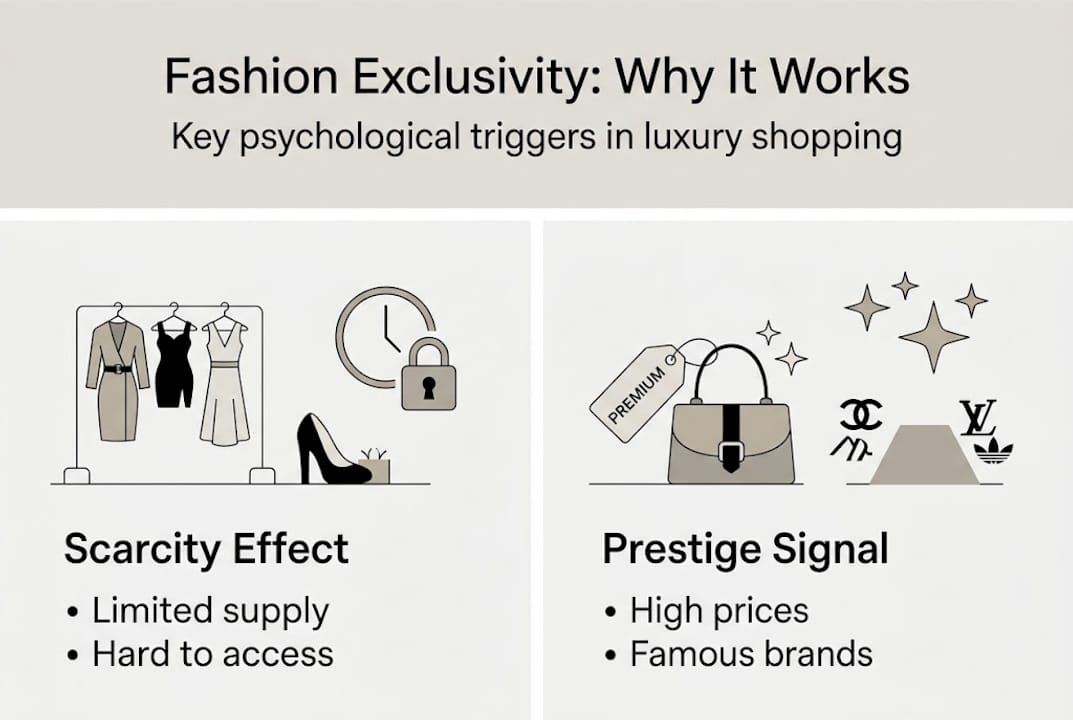
Exclusivity in fashion is maintained through deliberate scarcity tactics such as limited production, waiting lists, restricted access, and high pricing, enhancing perceived value and desirability via psychological principles like FOMO and the scarcity principle. This isn’t a side effect of luxury. It’s the product itself.
Then there’s the Veblen effect, a concept that flips basic economics on its head. Normally, higher prices reduce demand. In luxury, the opposite is often true. The Veblen effect explains how higher prices increase demand for luxury goods by signaling status and exclusivity, acting as a social filter. In other words, the price tag is part of the message.
Social comparison also plays a massive role. We constantly measure ourselves against peers, and what we wear is one of the clearest signals we send. Luxury items become shorthand for success, taste, and belonging. This is especially true among younger consumers. NFU and scarcity positively predict luxury purchase intention, moderated by FoMO and social comparison, especially among Gen Y/Z.
Here’s what those psychological levers actually look like in practice:
- Artificial scarcity: Brands cap production even when demand is higher, creating urgency.
- Waitlists as status: Being on a waitlist signals you’re serious enough to wait, which itself becomes a status symbol.
- Price anchoring: Extremely high prices make mid-tier luxury feel like a bargain by comparison.
- Social proof: Celebrity endorsements and influencer culture amplify the sense that everyone who matters already owns the item.
“The most powerful luxury brands don’t just sell products. They sell the feeling of being chosen.”
Understanding branding’s influence on exclusivity helps you see why certain names carry weight that others simply can’t replicate, no matter the price.
How brands create—and protect—exclusivity
Understanding the psychology is step one; applying it in practice is where brands make their mark.
Hermès is the most cited example for good reason. The Birkin bag isn’t just expensive. It’s nearly impossible to buy unless you have an established purchase history with the brand. That inaccessibility is the point. Deliberate scarcity tactics like limited production, waiting lists, and restricted access enhance perceived value by making the product feel like a privilege rather than a transaction.
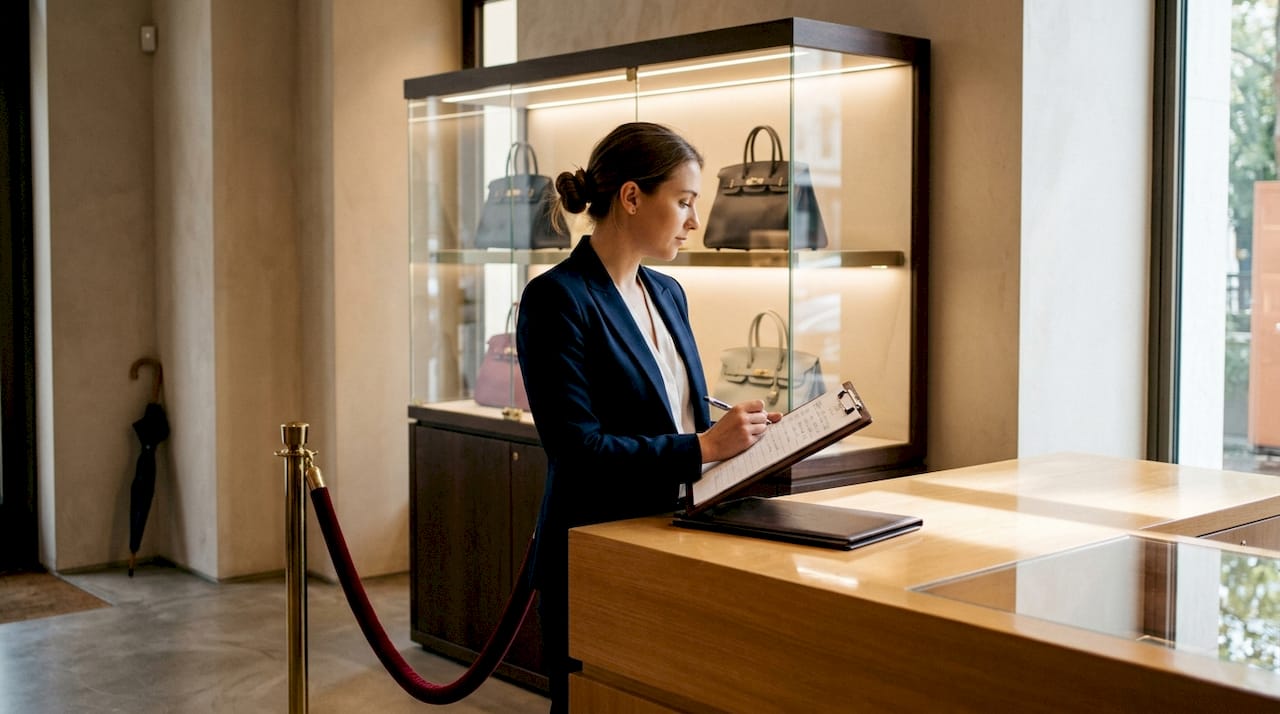
Beyond waitlists, brands use invitation-only sales, private client events, and curated VIP experiences to reinforce the sense that access is earned, not bought. This creates a layered hierarchy of customers, where the most loyal and high-spending clients receive perks that money alone can’t purchase.
Then there’s quiet luxury, sometimes called silent branding. This approach strips away the obvious logos and leans into exceptional materials, precise tailoring, and understated design. Quiet luxury enhances exclusivity through subtlety, no logos, superior materials, commanding higher prices. The message is coded. Only those who know, know.
Here’s how traditional logo-heavy luxury compares to the quiet luxury approach:
| Feature | Logo-heavy luxury | Quiet luxury |
|---|---|---|
| Brand visibility | High, immediately recognizable | Low, subtle signals only |
| Target audience | Status seekers, aspirational buyers | Insiders, established wealth |
| Price point | High | Often higher |
| Social signaling | Broad, public | Narrow, peer-coded |
| Trend sensitivity | Higher | Lower, more timeless |
Discounting is treated as a serious threat by most luxury houses. Once a brand starts offering frequent sales, consumers begin to expect them. That expectation erodes the sense of scarcity and, with it, the perceived value of the product. Brands like Chanel and Louis Vuitton have historically raised prices rather than discounted, even during economic downturns.
Pro Tip: If you’re drawn to quiet luxury, focus on pieces with exceptional construction and neutral palettes rather than visible logos. These items hold their value better and signal taste to those who recognize it, which is exactly the audience you want to impress.
Exploring fashion outlets’ exclusivity strategies reveals how even discounted luxury can preserve brand integrity when handled correctly.
The risks of discounts and resale: When exclusivity backfires
But maintaining exclusivity is a fragile balancing act. Let’s see how it can all go awry.
When luxury items show up at deep discounts or flood the resale market, the psychological spell starts to break. Consumers begin to question whether the product was ever truly scarce. That doubt is corrosive. Discounts and resale undermine exclusivity by signaling lower value, damaging brand image, and training consumers to wait for sales, which is exactly what luxury brands work hard to prevent.
The numbers are striking. Frequent discounting can reduce brand value by up to 33%. Meanwhile, the resale market is growing significantly faster than primary luxury sales, creating a parallel economy that brands struggle to control.
Here’s how official and unofficial resale channels compare:
| Factor | Official resale (brand-authorized) | Unofficial resale (third-party) |
|---|---|---|
| Brand image impact | Neutral to positive | Often negative |
| Authenticity guarantee | Yes | Variable |
| Perceived status | Preserved | Potentially reduced |
| Buyer protection | Strong | Weak |
| Price premium | Maintained | Often discounted |
The risks go beyond brand image. Buyers who purchase from unauthorized resale channels may receive counterfeit goods, lose warranty protections, or unknowingly contribute to a gray market that weakens the brands they love. The damage flows in both directions.
Key warning signs that a resale source may harm your investment:
- Prices significantly below retail without clear explanation
- No authentication documentation or provenance
- Seller with no verifiable history or reviews
- Items described as “new” but sold through informal channels
Pro Tip: When seeking discounts in luxury fashion, always verify the source. Understanding sales’ impact on designer value helps you distinguish between a smart buy and a status risk. Exploring brand reputation and resale effects before purchasing from secondary markets is always worth the extra step. And for a full breakdown of how to navigate this space safely, the guide on navigating high-end resale is essential reading.
The new face of exclusivity: Balancing access and appeal
With dangers on all sides, how do brands keep exclusivity fresh without shutting out their customer base?
The answer lies in controlled evolution. Brands are learning that rigid exclusivity can alienate aspirational buyers who represent future loyal customers. The solution isn’t to open the floodgates. It’s to manage access more intelligently.
Brands balance exclusivity and inclusivity via strategies like domestication in retail, online paradox resolution, and controlled resale programs such as Rolex’s certified pre-owned initiative. These approaches let brands expand their reach without diluting their prestige.
“The future of luxury isn’t about locking people out. It’s about making entry feel like an achievement.”
Silent branding is gaining ground during periods of economic uncertainty. When conspicuous consumption feels tone-deaf, understated quality becomes the smarter signal. Gen Z and younger millennials, who are increasingly ethically minded and skeptical of overt status displays, are driving this shift.
Three key strategies brands are using right now to balance exclusivity with access:
- Controlled resale programs: Brand-authorized pre-owned platforms let brands capture resale value while maintaining quality standards and brand narrative.
- Hybrid online-offline experiences: Exclusive digital drops paired with in-store VIP events create multiple tiers of access, satisfying both digital-native and traditional luxury consumers.
- Selective scarcity: Rather than making everything scarce, brands identify hero products to restrict while keeping entry-level items accessible, drawing aspirational buyers into the ecosystem.
For consumers, this creates real opportunity. Finding authentic luxury deals through the right channels lets you participate in the exclusivity narrative without paying full retail. And with the right approach, covered in detail in guides on luxury bargains and buying tips, you can build a wardrobe that signals genuine taste.
Our perspective: The true luxury is in savvy access
Here’s a view that most fashion coverage won’t give you: the obsession with being “the only one” who owns something is already outdated. The real power move in 2026 is intentional access.
We’ve seen firsthand that consumers who chase hype-driven drops and deep discounts from questionable sources often end up with pieces that lose their cultural cachet quickly. The smarter play is to focus on timeless, well-crafted items from verified sources, whether that’s a brand-authorized outlet or a reputable pre-owned platform. That’s where value and status actually intersect.
Ethical exclusivity is the next frontier. It means choosing pieces that reflect genuine quality and considered taste rather than logo saturation or manufactured hype. The authentic luxury resale guide we recommend is built around this principle. Status isn’t lost when you buy smart. It’s reinforced.
Discover exclusive luxury deals without compromising prestige
Ready to put your knowledge and style to work? The principles covered here point to one clear conclusion: where you shop matters as much as what you buy.
At Designer Label Sale, every piece is curated to give you the prestige of genuine luxury at prices that make sense. Whether you’re drawn to the understated elegance of Cédric Charlier gray leather pumps or the bold craftsmanship of Dolce & Gabbana gray leather ankle boots, you’ll find pieces that hold their status. Browse our full range of prestigious luxury bargains and shop with the confidence that comes from knowing exactly what you’re getting.
Frequently asked questions
Why do luxury fashion brands avoid discounts?
Luxury brands avoid discounts to protect their image and maintain exclusivity, as frequent price cuts can reduce perceived brand value by up to 33% and train consumers to wait for sales rather than buy at full price.
What is ‘quiet luxury’ and why is it more exclusive?
Quiet luxury focuses on subtle details and superior materials with minimal logos, commanding higher prices and appealing to insiders who recognize quality without needing a visible brand name to validate it.
Does buying pre-owned luxury damage the sense of exclusivity?
Buying pre-owned from authorized channels can preserve status and even reinforce brand narrative, but unofficial or heavily discounted sources often signal lower value and can harm the perceived exclusivity of the item.
How do brands balance exclusivity with wide appeal in modern times?
They use controlled resale programs, online-offline hybrid strategies, and selective scarcity to attract both loyal customers and aspirational newcomers without diluting the brand’s prestige or core identity.