

What Differentiates Luxury Labels: Key Insights
Spotting a designer bag in a crowded street or browsing exclusive labels online can spark both desire and doubt for fashion-focused shoppers worldwide. The search for true luxury hinges on more than just a logo; it is about finding brands shaped by exclusivity, craftsmanship, and storytelling that balance heritage with fresh creativity. This guide uncovers how authentic luxury brands signal prestige while still appealing to style-minded shoppers who appreciate smart investments and genuine quality.
Table of Contents
- Defining Luxury Labels In Fashion Today
- Types Of Luxury: Heritage Vs. Contemporary
- Key Traits: Exclusivity, Craftsmanship, Storytelling
- Pricing Strategies And Perceived Value
- Risks: Authenticity, Counterfeits, And Pitfalls
Key Takeaways
| Point | Details |
|---|---|
| Luxury Labels as Cultural Symbols | Luxury labels embody aspiration, creativity, and individual identity, transcending traditional clothing to represent personal style and social status. |
| Balance of Heritage and Contemporary Design | Successful luxury brands harmonize heritage and contemporary approaches, crafting narratives that respect traditions while adapting to evolving consumer preferences. |
| Craftsmanship and Storytelling | Authenticity in craftsmanship and compelling storytelling are essential in positioning luxury brands as more than mere products, creating deep emotional connections with consumers. |
| Strategic Pricing and Value Perception | Pricing in luxury markets is a key communication tool, with strategies focusing on preserving brand prestige and signaling exclusive value rather than just cost. |
Defining Luxury Labels In Fashion Today
Luxury labels represent far more than mere clothing - they are complex cultural symbols embodying aspiration, creativity, and individual identity. Luxury fashion transcends traditional product boundaries, transforming garments into statements of personal style and social positioning.
At their core, these brands distinguish themselves through several critical characteristics:
- Exceptional Quality: Meticulously crafted products with superior materials
- Heritage and Storytelling: Rich historical narratives that connect consumers to deeper cultural meanings
- Exclusivity: Limited production runs and carefully curated design approaches
- Experiential Value: Creating emotional connections beyond transactional purchases
Modern luxury labels expertly balance commercial growth with maintaining stringent qualitative standards. They communicate prestige through sophisticated branding strategies that signal both external status and internal personal transformation. Brand Identity becomes a complex ecosystem where design, marketing, and consumer perception intertwine seamlessly.
Authenticity remains paramount in this landscape. Consumers increasingly seek brands that demonstrate genuine commitment to craftsmanship, sustainability, and meaningful design principles. Luxury branding integrates intricate communication strategies that go far beyond traditional marketing approaches.
Pro Tip: When evaluating luxury labels, look beyond logos and examine the brand’s design philosophy, production techniques, and cultural significance.
Types Of Luxury: Heritage Vs. Contemporary
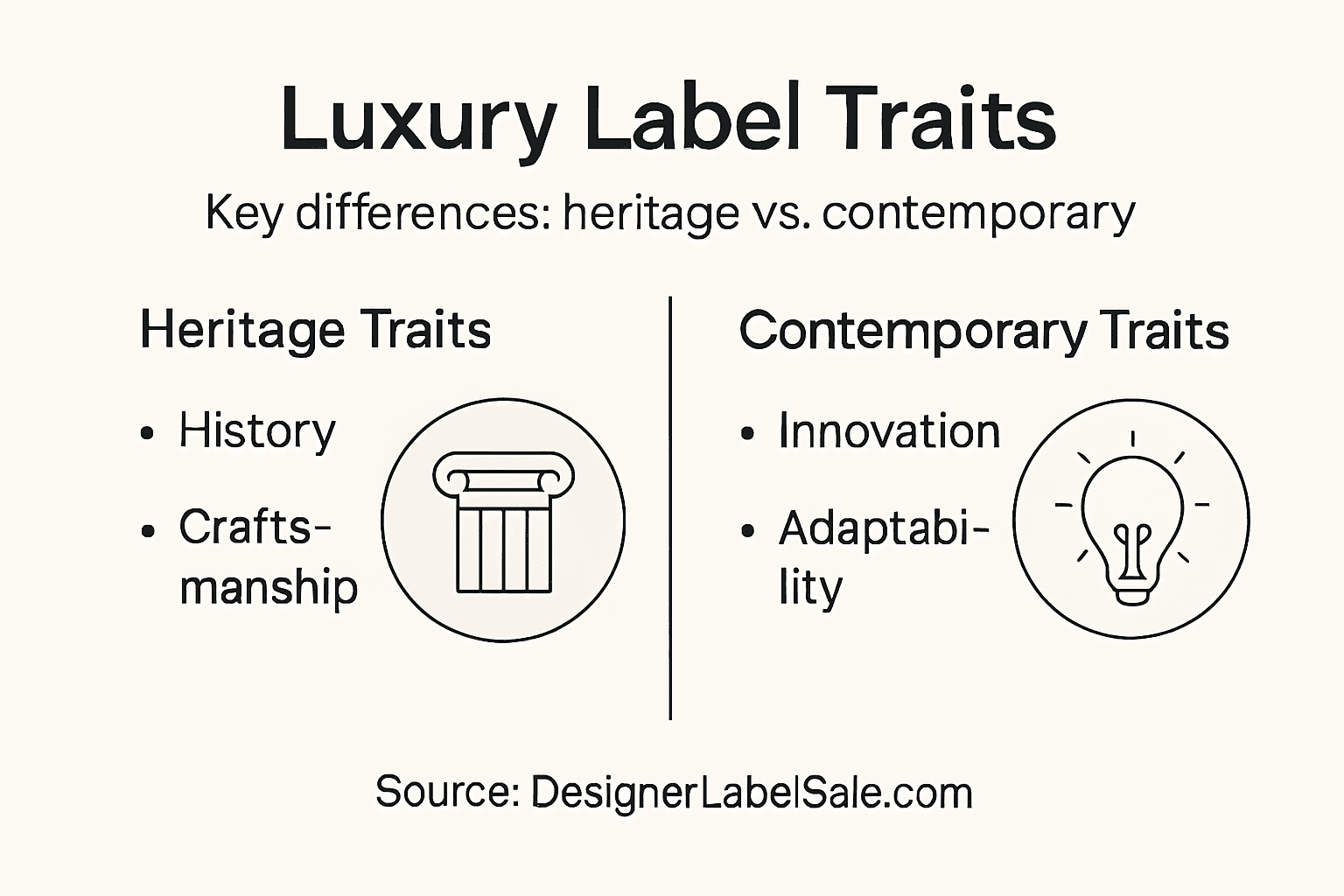
Luxury fashion presents a fascinating dichotomy between heritage brands and contemporary labels, each offering distinct approaches to design, storytelling, and consumer engagement. Heritage branding strategically leverages historical narratives to communicate authenticity and exclusivity in the fashion marketplace.
Heritage luxury brands are characterized by several key attributes:
- Deep historical roots spanning generations
- Established craftsmanship traditions
- Strong emotional connection to brand legacy
- Preservation of original design philosophies
- Meticulous attention to traditional production techniques
Contemporary luxury brands, by contrast, prioritize innovation and adaptability. They skillfully blend modern design sensibilities with occasional nods to traditional craftsmanship, creating dynamic product lines that appeal to evolving consumer preferences. Luxury brands balance heritage with creative innovation, navigating the delicate line between maintaining prestige and embracing change.

The most successful luxury labels understand that true excellence lies not in choosing between heritage and contemporary approaches, but in harmonizing these seemingly contradictory perspectives. They create narratives that respect historical foundations while remaining agile enough to meet current market demands, transforming potential limitations into opportunities for unique brand positioning.
Here’s a concise comparison of heritage and contemporary luxury brands:
| Aspect | Heritage Luxury Brands | Contemporary Luxury Brands |
|---|---|---|
| Foundation | Generations-old cultural roots | Modern creative concepts |
| Approach to Design | Tradition-driven, classic lines | Innovative, trend-sensitive |
| Relationship to Craft | Handcrafted, time-honored | Mix of technology and artisanship |
| Consumer Experience | Emotional prestige, legacy | Dynamic, personalized appeal |
Pro Tip: When evaluating luxury brands, look for those that thoughtfully integrate historical craftsmanship with forward-thinking design perspectives.
Key Traits: Exclusivity, Craftsmanship, Storytelling
Luxury fashion distills its essence through three pivotal characteristics that elevate brands beyond mere products. Craftsmanship and exclusivity form the core narrative of luxury brand positioning, creating a complex ecosystem of desire and aspiration.
The key traits that distinguish luxury labels include:
- Exclusivity: Limited production runs
- Precision: Meticulous artisan techniques
- Heritage: Deep historical connections
- Emotional Resonance: Narrative-driven brand experiences
- Quality: Uncompromising material selection
Craftsmanship represents the fundamental language of luxury, where emotional narratives transform product perception. Each piece becomes more than an object - it’s a carefully constructed story embodying generations of skill, cultural significance, and artistic expression. Artisans invest hundreds of hours perfecting techniques passed down through generations, ensuring that every stitch, seam, and detail communicates exceptional value.
Storytelling emerges as the connective tissue binding exclusivity and craftsmanship. Luxury brands don’t simply sell products; they curate experiences that invite consumers into an intimate world of tradition, innovation, and personal transformation. By weaving complex narratives around design origins, creative processes, and brand philosophy, these labels transcend transactional relationships and create profound emotional investments.
Pro Tip: Evaluate luxury brands by examining the depth of their storytelling and the authenticity of their craftsmanship, not just the price tag.
Pricing Strategies And Perceived Value
Luxury brands navigate a complex landscape where pricing transcends traditional economic models. Prestige pricing strategies fundamentally shape consumer perceptions, transforming price from a mere transactional element into a sophisticated communication tool that signals brand identity and exclusivity.
Key pricing approaches in luxury markets include:
- Prestige Pricing: Setting intentionally high price points
- Scarcity Pricing: Limiting product availability
- Value-Based Pricing: Emphasizing emotional and symbolic worth
- Dynamic Pricing: Adjusting prices based on market demand
- No-Discount Strategy: Maintaining brand integrity
Exclusivity drives perceived luxury value through strategic pricing mechanisms that go far beyond simple cost calculations. Luxury consumers don’t just purchase products; they invest in experiences, narratives, and symbolic representations of status. The price becomes a critical signaling mechanism that communicates craftsmanship, heritage, and social positioning.
The most sophisticated luxury brands understand that pricing is an art form. They carefully construct price points that balance economic sustainability with maintaining an aura of desirability and unattainability. By strategically avoiding constant discounts and maintaining a consistent premium positioning, these brands transform pricing from a commercial mechanism into a powerful storytelling device that reinforces their unique market identity.
Pro Tip: When assessing luxury brands, recognize that the price tag represents an intricate narrative of value beyond mere production costs.
Risks: Authenticity, Counterfeits, And Pitfalls
The luxury market faces a complex battle against counterfeiting that threatens brand integrity and consumer trust. Counterfeit goods create multifaceted challenges for luxury brands, impacting everything from economic performance to brand perception and consumer loyalty.
Key risks associated with counterfeit luxury products include:
- Financial Losses: Direct revenue erosion
- Brand Reputation: Diminished perceived value
- Quality Compromise: Inferior product experiences
- Consumer Trust: Undermined brand credibility
- Legal Complications: Intellectual property challenges
Digital marketplaces have transformed counterfeit dynamics, particularly among younger consumers who navigate complex ethical landscapes of authenticity. The proliferation of digital platforms has made distinguishing genuine products increasingly challenging, with some consumers deliberately choosing counterfeit items as a form of accessible luxury consumption.
Luxury brands must deploy sophisticated strategies to combat these risks, including advanced authentication technologies, transparent supply chains, and consumer education initiatives. The goal extends beyond mere protection - it’s about reinforcing the unique value proposition that distinguishes genuine luxury products from mass-produced imitations.
This table summarizes key luxury brand risks and strategic responses:
| Risk Faced | Impact on Brand | Common Strategy to Mitigate |
|---|---|---|
| Counterfeiting | Loss of trust, revenue | Advanced product authentication |
| Reputation Damage | Eroded prestige | Transparent supply chain |
| Quality Dilution | Unsatisfied customers | Strict quality controls |
| Legal Challenges | Financial penalties | Intellectual property enforcement |
Pro Tip: Always verify product authenticity through official brand channels and purchase only from authorized retailers.
Discover Authentic Luxury at Unbeatable Prices
Understanding the distinct qualities that define luxury labels can be overwhelming. The challenges of verifying authenticity, appreciating craftsmanship, and navigating exclusivity are real concerns for luxury shoppers seeking genuine pieces that reflect true value and heritage. If you want to embrace the elegance of designer fashion while avoiding common pitfalls like counterfeits and inflated pricing, it is essential to choose trusted sources that prioritize authenticity and quality.
Experience a curated selection of authentic products from celebrated brands at DesignerLabelSale.com. Our platform delivers exclusive access to discounted designer clothing, handbags, and accessories with clear pricing, fast shipping, and a commitment to genuine craftsmanship. From fashion-conscious men and women to collectors seeking heritage-inspired styles, we make authentic luxury attainable without compromising on the story or quality behind each piece.
Elevate your wardrobe today by exploring our new arrivals and best sellers collections. Take advantage of limited-time sales while trusting in the authenticity and prestige that true luxury labels offer. Visit DesignerLabelSale.com now to secure your luxury investment with confidence.
Frequently Asked Questions
What defines luxury labels in fashion?
Luxury labels are defined by their exceptional quality, heritage, exclusivity, and the emotional connections they create with consumers. They transcend mere clothing, representing aspiration and individual identity.
How do heritage luxury brands differ from contemporary luxury brands?
Heritage luxury brands emphasize traditional craftsmanship and historical narratives, while contemporary brands focus on innovation and modern design sensibilities. Both approaches can coexist and even complement each other, creating unique brand positioning.
Why is exclusivity important for luxury brands?
Exclusivity enhances the perceived value of luxury products. It is enforced through limited production runs, which not only heighten desirability but also create a stronger emotional investment from consumers.
What risks do luxury brands face in the context of counterfeits?
Luxury brands face risks such as financial losses, diminished brand reputation, and quality compromises due to counterfeiting. These challenges require sophisticated strategies like advanced authentication technologies and transparent supply chains to maintain consumer trust.