

Sustainable Luxury Fashion Explained: Ethics and Impact
Spotting a rare find from a coveted French or Italian label can feel exhilarating, but for many cosmopolitan women, luxury means more than iconic design. Today’s style leaders balance a love of exclusive pieces with a strong desire for sustainability woven into every purchase. New research shows luxury fashion is transforming, blending ethical sourcing, transparency, and environmental care directly into brand identity. Discover how leading brands are reshaping what sustainable luxury truly means for the modern, eco-conscious wardrobe.
Table of Contents
- What Defines Sustainable Luxury Fashion Today
- Types of Sustainable Practices in Luxury
- Eco-Friendly Materials and Innovative Techniques
- Spotting Authentic Sustainable Designer Brands
- Risks of Greenwashing and How to Avoid It
Key Takeaways
| Point | Details |
|---|---|
| Sustainable Luxury Fashion | Represents a shift towards integrating environmental responsibility, ethical practices, and social consciousness in the fashion industry. |
| Consumer Demand for Transparency | Modern consumers increasingly desire visibility into production processes and the environmental impact of their purchases. |
| Identifying Authentic Brands | Authentic sustainable luxury brands provide transparent supply chains, third-party certifications, and measurable impact reporting. |
| Greenwashing Awareness | Consumers must be vigilant against greenwashing, requiring brands to substantiate their sustainability claims with concrete evidence. |
What Defines Sustainable Luxury Fashion Today
Sustainable luxury fashion represents a profound transformation in how high-end brands approach design, production, and consumer values. This evolving concept goes far beyond traditional aesthetics, integrating environmental responsibility, ethical practices, and social consciousness into every aspect of fashion creation. Emerging research frameworks reveal sustainable luxury fashion is no longer a passing trend but a fundamental industry paradigm shift.
At its core, sustainable luxury fashion encompasses several critical dimensions:
- Environmental Stewardship: Minimizing ecological footprints through responsible material sourcing
- Ethical Production: Ensuring fair labor practices and worker well-being
- Transparency: Providing complete supply chain visibility to consumers
- Circular Design: Creating garments with extended lifecycle and recyclability
The transformation involves reimagining luxury not just as aesthetic excellence, but as a holistic commitment to planetary and human welfare. Modern luxury consumers increasingly demand brands that demonstrate genuine environmental and social accountability. They seek transparent production processes, understanding where and how their clothing is manufactured, and the broader impact of their purchasing decisions.
Brands pioneering this approach recognize that sustainability isn’t a marketing strategy, but a fundamental business philosophy. Academic research demonstrates sustainable practices can actually enhance brand equity and create competitive advantages in an increasingly conscientious market.
Pro tip: When evaluating sustainable luxury fashion, look beyond marketing claims and examine a brand’s comprehensive environmental and social impact reporting.
Types of Sustainable Practices in Luxury
Sustainable luxury fashion has evolved into a multifaceted approach that encompasses far more than traditional environmental considerations. Comprehensive research frameworks reveal a complex ecosystem of sustainable practices that brands are adopting to meet increasingly sophisticated consumer expectations.
The primary types of sustainable practices in luxury fashion include:
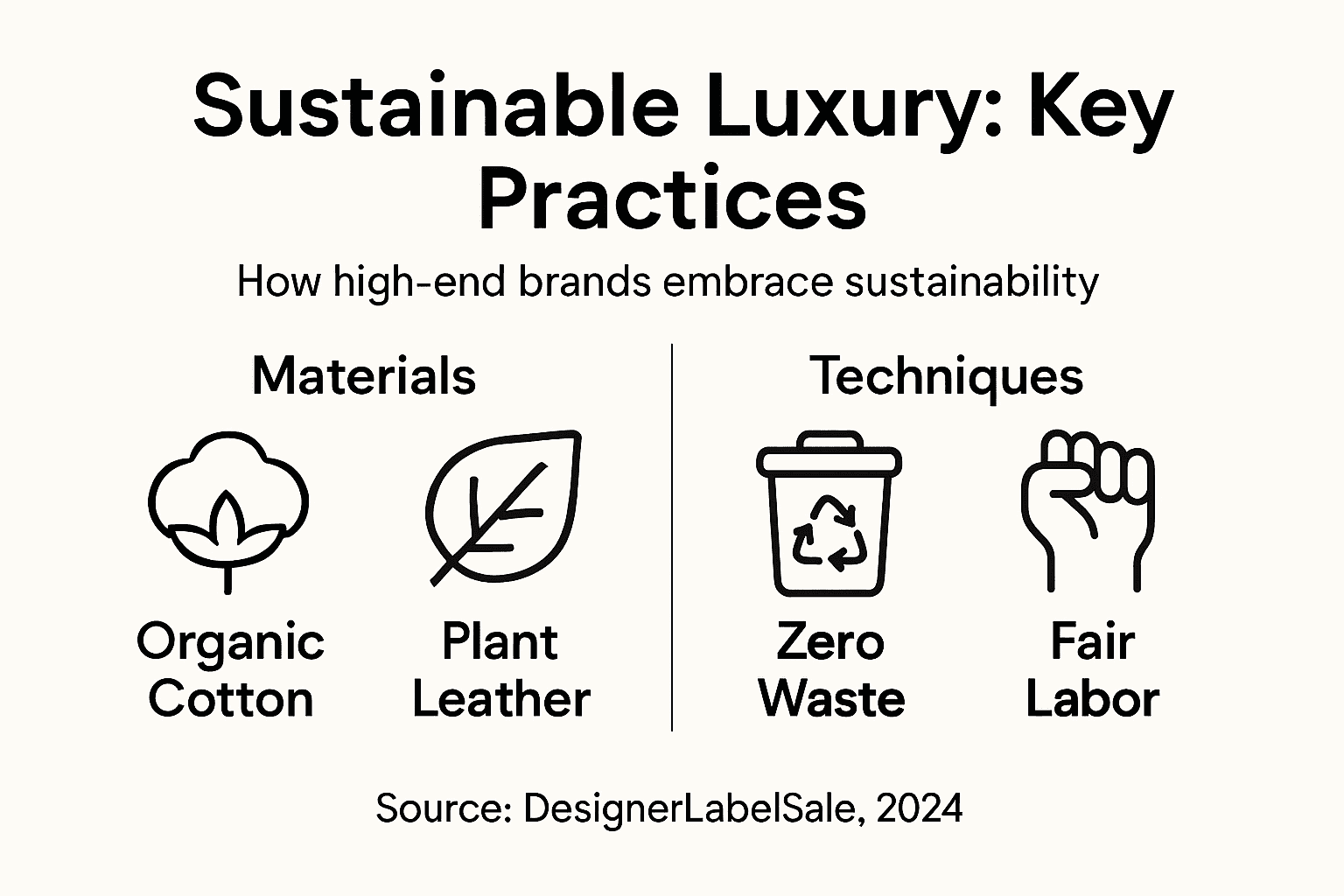
- Material Innovation: Developing eco-friendly fabrics from recycled plastics, organic fibers, and regenerative materials
- Circular Design: Creating garments with modular construction, repair capabilities, and end-of-life recyclability
- Ethical Labor Practices: Ensuring fair wages, safe working conditions, and transparent supply chains
- Carbon Footprint Reduction: Implementing renewable energy in production, minimizing transportation emissions
- Water Conservation: Developing low-water textile processing techniques and water-recycling systems
Each of these practices represents a strategic approach to reimagining luxury fashion as a responsible, forward-thinking industry. Brands are no longer just selling clothing, but positioning themselves as agents of positive environmental and social change. The most progressive luxury labels integrate multiple sustainability dimensions, recognizing that true responsibility requires a holistic transformation of traditional manufacturing paradigms.
Transparency has become a critical component of these sustainable practices. Modern luxury consumers demand complete visibility into production processes, materials sourcing, and the broader social impact of their purchasing decisions. This shift has pushed brands to develop sophisticated tracking and reporting mechanisms that provide unprecedented insight into their sustainability efforts.
Pro tip: When assessing a luxury brand’s sustainability claims, look for detailed impact reports and third-party certifications that validate their environmental and social commitments.
The following table compares key sustainable practices, their goals, and long-term impact in luxury fashion:
| Sustainable Practice | Main Goal | Long-Term Industry Impact |
|---|---|---|
| Material Innovation | Reduce resource depletion | Lower raw material demand |
| Circular Design | Cut waste, extend product lifecycle | Less landfill, more recycling |
| Ethical Labor Practices | Enhance worker welfare | Improved brand trust, worker loyalty |
| Carbon Footprint Reduction | Limit greenhouse gas emissions | Industry-wide emission decreases |
| Water Conservation | Minimize water use and pollution | Safeguarded water resources |
Eco-Friendly Materials and Innovative Techniques
Sustainable luxury fashion is experiencing a revolutionary transformation through groundbreaking material innovations and design techniques. Cutting-edge sustainable material trends are redefining how luxury brands approach environmental responsibility, challenging traditional manufacturing paradigms.
The most innovative eco-friendly materials currently disrupting luxury fashion include:
- Regenerative Textiles: Fabrics created from agricultural waste, algae, and carbon-negative processes
- Bio-Based Leather Alternatives: Innovative materials like mushroom leather, grape leather, and cactus-derived textiles
- Recycled Performance Fibers: High-quality textiles made from reclaimed plastics and industrial waste
- Organic Natural Fibers: Sustainably grown cotton, hemp, and bamboo with minimal environmental impact
- Upcycled Luxury Materials: Repurposing existing high-quality fabrics to create new, unique garments
These material innovations represent more than environmental consciousness. They demonstrate a profound reimagining of luxury fashion’s potential to drive systemic change. Designers are now using technology and creativity to transform waste streams into high-performance, aesthetically compelling textiles that challenge traditional notions of luxury and sustainability.

The most progressive brands are integrating innovative design techniques like zero-waste pattern making, 3D printing for customization, and modular designs that extend garment lifecycles. These approaches not only reduce waste but also offer consumers more versatile, long-lasting fashion options that align with circular economy principles.
Pro tip: Research brands that provide transparent information about their material sourcing and manufacturing processes to ensure genuine sustainability commitments.
Spotting Authentic Sustainable Designer Brands
Identifying truly sustainable luxury brands requires more than surface-level marketing claims. Authentic branding strategies demand rigorous scrutiny and a sophisticated understanding of sustainability beyond mere greenwashing.
Key indicators of authentic sustainable designer brands include:
- Transparent Supply Chain: Detailed, publicly available information about manufacturing processes
- Third-Party Certifications: Verifiable credentials from recognized environmental and ethical standards organizations
- Measurable Impact Reporting: Specific, quantifiable data about environmental and social contributions
- Material Traceability: Clear documentation of material origins and sustainability metrics
- Long-Term Commitment: Consistent, demonstrable investment in sustainable practices beyond temporary marketing campaigns
Consumers must look beyond superficial sustainability claims and demand comprehensive evidence of genuine environmental responsibility. The most credible brands will provide granular details about their ecological footprint, including carbon emissions, water usage, and waste reduction strategies.
Avoiding greenwashing requires critical consumer engagement with brand communications. This means investigating beyond marketing language, seeking concrete proof of sustainable practices, and understanding the nuanced complexities of environmental responsibility in luxury fashion.
Pro tip: Request specific sustainability reports and independently verify brand claims through recognized environmental certification databases.
Here’s how to distinguish authentic sustainable luxury brands from those using greenwashing:
| Indicator | Authentic Brands | Greenwashing Brands |
|---|---|---|
| Transparency | Public, detailed supply chain | Selective or hidden information |
| Certifications | Independent, widely recognized | Self-created badges |
| Impact Reporting | Quantitative, audited data | Vague or non-specific figures |
| Commitment | Long-term, brand-wide change | Short-term marketing focus |
Risks of Greenwashing and How to Avoid It
Greenwashing represents a critical challenge in sustainable fashion, where brands create misleading impressions about their environmental credentials. Fashion industry greenwashing risks threaten consumer trust and undermine genuine sustainability efforts across the luxury market.
Common greenwashing tactics include:
- Vague Environmental Claims: Using undefined terms like “eco-friendly” without substantive evidence
- Misleading Imagery: Utilizing green-themed marketing that suggests environmental commitment
- Partial Sustainability: Highlighting one sustainable practice while ignoring broader environmental impacts
- Unverified Certifications: Displaying meaningless or self-created environmental badges
- Statistical Manipulation: Presenting data out of context to appear more sustainable
Regulatory scrutiny of environmental claims has intensified globally, with countries implementing strict guidelines to protect consumers. Luxury brands now face potential legal and financial consequences for deceptive sustainability marketing, making authentic communication more crucial than ever.
Effective prevention requires brands to develop comprehensive, transparent sustainability strategies that go beyond marketing rhetoric. This means providing detailed, verifiable information about environmental practices, publishing comprehensive impact reports, and demonstrating measurable progress toward genuine sustainability goals.
Pro tip: Always cross-reference brand sustainability claims with independent environmental certification databases and third-party audits.
Discover Sustainable Luxury Fashion Without Compromise
Understanding the true meaning of sustainable luxury fashion means recognizing the importance of transparency, ethical production, and eco-friendly materials. Yet, finding authentic luxury pieces that align with these values while fitting your budget and lifestyle is challenging. If you seek genuine designer fashion that balances style and responsibility, you deserve access to trusted brands that prioritize quality and authenticity.
Shop confidently at DesignerLabelSale, your online luxury fashion outlet specializing in authentic discounted designer clothing, handbags, accessories, and footwear. Explore curated collections that combine sustainable mindset with competitive prices. Take advantage of fast shipping and international options to bring responsible luxury right to your door. Start your journey toward smarter luxury choices today by visiting DesignerLabelSale and browse unique selections that respect both people and planet.
Frequently Asked Questions
What is sustainable luxury fashion?
Sustainable luxury fashion refers to high-end fashion brands that prioritize environmental responsibility, ethical practices, and social consciousness throughout their design, production, and supply chain processes.
How can I evaluate whether a luxury brand is truly sustainable?
To assess a brand’s sustainability, look for transparency in their supply chain, third-party certifications, measurable impact reporting, and a long-term commitment to improving their environmental and social practices.
What are common practices in sustainable luxury fashion?
Common practices include material innovation using eco-friendly fabrics, circular design to extend garment life, ethical labor practices for fair treatment of workers, and strategies to reduce carbon footprints and conserve water.
What are the risks of greenwashing in luxury fashion?
Greenwashing occurs when brands mislead consumers about their sustainability efforts. Common tactics include vague claims, misleading imagery, and highlighting select sustainable practices while ignoring broader environmental impacts.