

How to Spot Authentic Designer Labels Online Easily
Sourcing genuine designer labels at a discount can feel overwhelming when counterfeits look more convincing than ever. For fashion-forward shoppers across Europe, Asia, and North America, understanding what sets real luxury products apart has never been more important. Discover how to spot authentic designer brand signatures and distinguish high-quality craftsmanship, with actionable strategies for research, detailed inspection, and expert label verification to help you buy confidently and avoid costly mistakes.
Table of Contents
- Step 1: Prepare By Researching Designer Brand Signatures
- Step 2: Inspect Product Details And Craftsmanship Closely
- Step 3: Verify Authenticity Through Labels And Tags
- Step 4: Compare Pricing And Seller Reputation Carefully
- Step 5: Confirm With Expert Authentication Resources
Quick Summary
| Key Point | Explanation |
|---|---|
| 1. Research Brand Signatures | Investigate unique visual traits of designer brands through official sources to enhance your authentication skills. |
| 2. Inspect Craftsmanship Closely | Examine details like stitching and materials to identify signs of authenticity in designer products. |
| 3. Verify Labels and Tags | Check serial numbers and printing quality on labels to confirm the product’s genuine status. |
| 4. Compare Prices and Sellers | Research market prices and seller reputations to identify potential counterfeit risks before purchasing. |
| 5. Utilize Expert Authentication Resources | Leverage professional authentication services to obtain trusted validation of luxury items for peace of mind. |
Step 1: Prepare by researching designer brand signatures
Authentic luxury brands have unique visual and design signatures that set them apart from counterfeits. Understanding these distinctive characteristics requires systematic research and strategic observation. Academic design studies reveal that designer brand signatures are complex expressions of identity involving multiple visual and sensory elements.
To effectively research designer brand signatures, focus on several key investigative strategies:
- Examine official brand websites and authorized retailer platforms
- Study high-resolution product images from multiple angles
- Review professional fashion photography and editorial content
- Compare official brand documentation and visual archives
- Analyze detailed close-up images of logos, stitching, and hardware
The process involves understanding subtle design nuances that communicate authenticity. Brand logo research highlights that genuine designer labels maintain consistent visual markers across different product lines and collections. These markers include precise logo placement, specific font styles, exact color tones, and unique manufacturing techniques.
Authentic designer brands invest significantly in maintaining consistent visual signatures that cannot be easily replicated by counterfeiters.
Professional researchers recommend creating a comparative visual database of authentic brand characteristics. This means collecting reference images from official sources, documenting specific design details, and developing a keen eye for distinguishing genuine features.
Pro tip: Keep a dedicated digital folder with high-quality reference images from official brand sources to help train your visual authentication skills.
Step 2: Inspect product details and craftsmanship closely
Authentic designer labels reveal their quality through meticulous craftsmanship that cannot be easily replicated. Luxury item authentication requires a systematic approach to examining product details with a critical and discerning eye.
When inspecting designer items, focus on these critical craftsmanship indicators:
- Examine leather quality and texture
- Check stitching uniformity and precision
- Evaluate hardware weight and finish
- Assess material consistency across the entire item
- Verify logo placement and engraving details
- Inspect thread color matching and seam alignment
Professional authenticators emphasize the importance of scrutinizing subtle manufacturing nuances. Genuine designer products demonstrate exceptional attention to detail, with perfectly aligned patterns, consistent color tones, and flawless construction techniques that mass-produced counterfeits cannot reproduce.
Authentic craftsmanship is not just about appearance, but the intricate details that reveal true quality and expertise.
Experienced collectors recommend using multiple light sources when examining potential luxury items, as different lighting can reveal hidden imperfections or manufacturing inconsistencies that might not be visible at first glance.
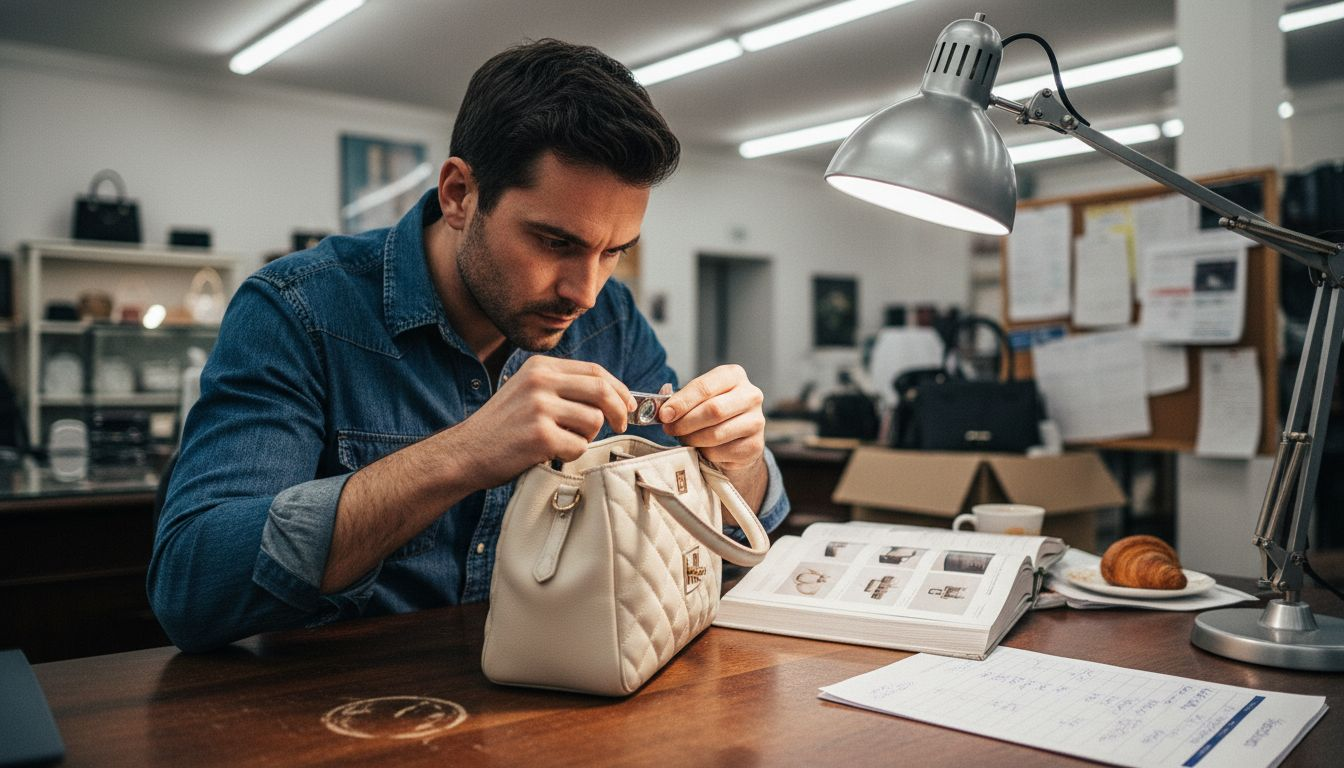
Pro tip: Invest in a high-quality jeweler’s loupe or magnifying glass to inspect microscopic details that separate authentic designer pieces from counterfeits.
Step 3: Verify authenticity through labels and tags
Authentic designer labels rely on precise identification markers that distinguish genuine products from sophisticated counterfeits. Designer label authentication requires a systematic examination of intricate labeling details that tell the true story of a product’s origin.
When verifying designer labels, focus on these critical authentication elements:
- Inspect serial number placement and formatting
- Check holographic or unique security tags
- Examine label material quality and printing precision
- Verify consistent font styles and embossing techniques
- Compare label details with official brand documentation
- Look for country of manufacture information
Professional authentication experts emphasize microscopic details that counterfeiters struggle to replicate accurately. Each designer brand uses unique labeling techniques that serve as intricate fingerprints of authenticity.
Genuine designer labels communicate their legitimacy through meticulously crafted identification markers that cannot be easily duplicated.
Experienced collectors recommend cross-referencing multiple authentication sources when examining labels, as subtle variations can reveal critical insights about a product’s genuine status. Tag construction analysis provides deeper understanding of these complex verification processes.
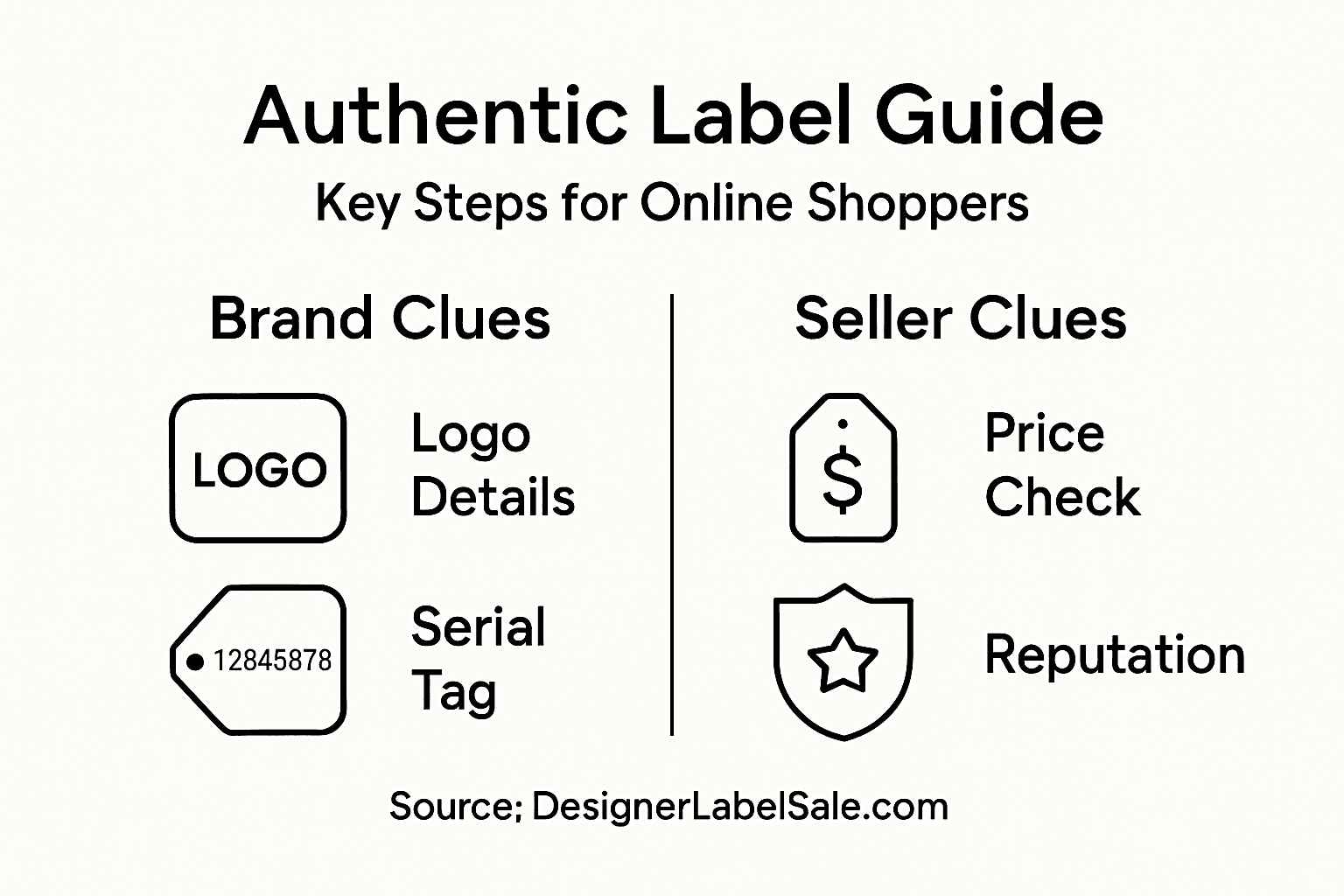
Pro tip: Photograph labels from multiple angles and compare them side-by-side with official brand reference images to detect even the most subtle inconsistencies.
Step 4: Compare pricing and seller reputation carefully
Authentic designer products demand strategic price comparison and thorough seller evaluation to protect yourself from potential counterfeits. Authentication research consistently warns that unrealistic pricing is often the first red flag for potential fraudulent merchandise.
When comparing pricing and assessing seller reputation, consider these critical strategies:
- Research standard market prices for specific designer items
- Compare prices across multiple legitimate platforms
- Check seller’s customer review ratings
- Verify seller’s return and authenticity guarantee policies
- Investigate seller’s history and specialized expertise
- Look for transparent authentication processes
Professional shoppers understand that pricing requires nuanced investigation. Extremely low prices often indicate potential counterfeit products, while prices just slightly below standard retail might represent legitimate discount channels.
Exceptional deals that seem too good to be true are typically warning signs of potential fraudulent merchandise.
Experienced luxury shoppers recommend comprehensive background checks on sellers, including verifying their professional credentials, reviewing detailed customer feedback, and examining their authentication protocols before making any purchases.
Pro tip: Create a spreadsheet tracking seller details, pricing variations, and authentication evidence to develop a systematic approach to verifying designer label purchases.
Step 5: Confirm with expert authentication resources
Navigating the complex world of designer label authentication requires professional insight and specialized expertise. Professional authentication services provide critical validation tools that combine expert knowledge with advanced technological analysis to confirm product genuineness.
When seeking expert authentication, consider these strategic approaches:
- Research reputable authentication platforms
- Understand their verification methodologies
- Prepare detailed product documentation
- Submit comprehensive item photographs
- Request official certification reports
- Compare multiple expert opinions
Professional authentication requires comprehensive documentation, including clear images from multiple angles, original purchase receipts, and specific product details that help experts conduct thorough evaluations.
Expert authentication transforms uncertainty into confidence by providing professional, systematic verification of luxury items.
Experienced collectors recommend comprehensive authentication services that offer detailed certification processes. Luxury item verification now combines human expertise with cutting-edge technological tools to deliver rapid and precise results.
Pro tip: Always request a detailed written authentication report that includes specific identification markers and expert analysis to protect your investment.
The table below clarifies differences between genuine and counterfeit designer products:
| Aspect | Genuine Designer | Counterfeit Item |
|---|---|---|
| Logo Placement | Always precise and consistent | Often misaligned or varied |
| Material Quality | High-grade, uniform materials | Inconsistent or cheaper sources |
| Label Details | Crisp, exact printing | Blurry, uneven text |
| Seller Reputation | Established and verifiable | Unclear or dubious history |
| Price Point | Reflects brand value | Unusually low or erratic |
Here’s a summary of how each authentication step supports the verification process:
| Step | Main Goal | Key Benefit |
|---|---|---|
| Research Signatures | Recognize brand’s unique traits | Builds foundational expertise |
| Inspect Craftsmanship | Spot quality and construction clues | Reveals inconsistencies quickly |
| Check Labels & Tags | Validate using micro-markers | Confirms identity details |
| Compare Prices & Sellers | Identify risky offers | Reduces counterfeit risk |
| Expert Authentication | Obtain documented proof | Ensures total confidence |
Shop Authentic Luxury Confidently with DesignerLabelSale.com
Spotting authentic designer labels online can be challenging. This article highlights the importance of researching brand signatures, inspecting craftsmanship, verifying labels, and carefully comparing sellers and prices to avoid counterfeit traps. At the heart of your concerns are authenticity, trust, and quality assurance when purchasing luxury items online.
That is why DesignerLabelSale is your trusted partner for genuine designer fashion delivered at compelling prices. Our platform specializes in authentic designer handbags, clothing, and accessories rigorously curated to meet the highest standards. We prioritize verified authenticity, customer confidence, and transparent pricing to help you shop luxury without worry.
Discover exclusive deals on sought-after brands with the peace of mind that every item has undergone detailed quality and authenticity checks.
Take control of your luxury shopping journey today by exploring the curated collections at DesignerLabelSale.com. Whether you want to dive into the latest arrivals or browse best sellers, our user-friendly site empowers you to find authentic designer pieces with ease. Start now to experience trusted authenticity, unbeatable prices, and fast shipping tailored for discerning fashion lovers.
Frequently Asked Questions
How can I identify authentic designer labels online?
To identify authentic designer labels online, focus on specific details such as logo placement, stitching quality, and authenticity tags. Examine high-resolution images on official brand websites and authorized retailer platforms to compare these features against potential purchases.
What are the key elements to check for verifying craftsmanship in designer products?
When verifying craftsmanship in designer products, look carefully at the quality of materials, stitching uniformity, and hardware details. For instance, ensure the stitching is consistent and even across the item, which often indicates authenticity.
How do I safely compare prices of designer items online?
To safely compare prices of designer items online, research standard market prices across multiple legitimate platforms. Avoid offers that are significantly lower than the average retail price to evade potential counterfeits.
What should I look for in labels and tags for designer authentication?
In labels and tags, inspect serial number placement, font consistency, and the quality of materials used. Compare these details with official brand documentation to ensure they match accurately, indicating authenticity.
How can expert authentication services help confirm a designer item’s authenticity?
Expert authentication services can confirm a designer item’s authenticity by providing official certification based on meticulous evaluations. Prepare detailed product documentation and submit clear photographs to help facilitate the authentication process effectively.
What steps can I take if I suspect a designer item is counterfeit?
If you suspect a designer item is counterfeit, take immediate action by revisiting and closely inspecting the item’s details. Compare its craftsmanship and labeling against known authentic products and consider seeking expert verification for a definitive assessment.